11052 Picaza Place, San Diego, CA 92127
Ph: (858) 487-9017 • Fax: (858) 592-0689
Email: info@craneconsulting.com

contact us
site map
Individual and Group Assessments:

We have created several individual and group assessment instruments to aid both our clients and us in understanding the strengths and challenges, and determining the performance gaps that exist. Taken along with anonymous interviews, these tools inform us in how to shape the consulting engagement and leverage the implementation activities for the highest impact.


Coaching Culture Assessment Report:

it's NEW, proven, and the best way to know if you are being successful.

We utilize this instrument to determine the extent to which a “coaching culture” exists in the client system. The assessment is combined with interviews and is used to determine gaps that need addressing, and directly inform the design of the consulting approach to creating the “high-performance coaching culture.” This assessment represents a baseline against future progress can be measured.

Individual Multi-Rater Assessment – A 360° Feedback Report – “The 7 C’s of Transformational Coaching

These core competencies capture the tone, demeanor, and process skills required by today's leaders. The Transformational Coaching 360 feedback process is used with our clients and available for direct purchase (see below). Each of the 7 competencies is defined by 5 specific behaviors, making this a highly focused, powerful tool for personal discovery and development.


The 7 C's of Transformation Coaching
Group Assessments

The 7 C’s of High Performance Teams:

Our unique team-effectiveness model provides a systematic and measurable methodology for identifying a team’s performance strengths and challenges. We use this data to custom-design and facilitate experiential team development sessions focused on building alignment, cohesion, and acquiring critical team skills. This assessment represents a baseline against future progress can be measured.

Importantly, The 7 C’s of High-Performance Teams represents THE ongoing Leadership Agenda for the leader of the team. It is through working these issues and developing these skills that the leader and the team become effective in dealing with all dimensions of the team performance.

The 7 C's of High-Performing Teams

Instructions:

Place your mouse over each of 5 areas for more information >

CLEAR

It is essential that the communication process through which the coaching is delivered is effective at creating a shared understanding. The Transformational Coach consciously eliminates ambiguity and mixed messages. The coach pays attention to how the message is interpreted by the coachee, and uses active listening skills to insure understanding.

COMMITTED

The Transformational Coach’s commitment to the coachee’s success is the foundation for trust and rapport in the relationship. This helps the coachee to build personal confidence in the security of the coaching relationship, and creates a safe environment for risk taking.

COMPASSIONATE

Fear inhibits people from performing up to their potential. As the Transformational Coach brings acceptance, forgiveness, and allows a reasonable freedom to fail, a safe environment is created that supports learning, appropriate experimentation, and growth in people.

CONGRUENT

People pay more attention to what others do – and less to what they say. If there is perceived disparity, trust is lost. The Transformational Coach must be aligned in thoughts, words, and actions to be a positive model of the attitudes and behaviors valued by the organization.

COURAGEOUS

The Transformational Coach must act with courage in the face of interpersonal or organizational challenges. Being open and vulnerable is part of what it takes to establish and maintain trust. Coaching requires the skillful confrontation of issues that are may be uncomfortable to address. Facing issues head on is an accountable behavior that moves people and the organization forward.

COLLABORATIVE

The Transformational Coach works to create a partnership that “levels the playing field” with the coachee. Though the coach and coachee have different roles in the organization, the coach nurtures an egalitarian, high-trust, partnering relationship that transforms the way they work together. This sets the condition for performance being dramatically enhanced.

CHALLENGING

A Transformational Coach’s purpose is to bring out the best in people. This is accomplished by looking for positive ways to stretch and develop others. The coach encourages people to develop new skills outside of their personal zone of comfort by constructively challenging the coachee’s thinking, attitudes, beliefs, and behaviors.

Instructions:

Place your mouse over each of 7 areas for more information >

Course

If the course is sufficiently clear and supported, it provides context for and guides the team’s actions. A clear course is a necessary condition for strategic success. These components form an internal directional system: purpose, vision, mission, strategy, goals, priorities, and action plans.

Commitment

Commitment is the unwavering choice to support the team and the team’s objectives with one’s best personal efforts. This quality establishes the necessary conditions for individual and team excellence. High performance requires clear roles, responsibilities, accountabilities, and the explicit individual and group agreements that empower people to risk action in the face of uncertainty.

Communications

High-performance communications are facilitated when information and learning is shared among people and teams. When it is effective, it facilitates forward action and positive results. If ineffective, it creates chaos. High-performance communication is clear, consistent, timely, thorough, clear, and focused on the strategic imperatives of the business.

Character

Character refers to the defining qualities and values of the team which guide decisions concerning internal and external constituencies of the organization. The values and behaviors modeled by leadership establish the tone and expectations for the entire organization, making it a place in which people feel proud to work. High character in indicated by the degree of congruity of actual behaviors candled against espoused values.

Change & Creativity

Change and Creativity are the dual processes through which people and organizations continuously enhance their effectiveness. A compelling business case for change outlines the big picture, and continuous improvement processes provide process improvement technologies to improve systems. Savvy leaders follow an enlightened approach to leading change by directly addressing the issues that create fear, resistance, and sabotage of the change initiative. This process stimulates creativity and innovation, and resistance evaporates.

Collaboration

Teamwork in a high-performance organization is demonstrated by people’s willingness to form partnerships beyond simple "win/win" outcomes to create synergistic gains for the business. Internal politics, competition, and conflict inhibit the open sharing of breakthrough ideas that are needed to solve difficult business problems. Beyond common goals, skills for conflict resolution, trust building, and effective decision-making are needed to create the optimal environment of mutual support.

Coaching

Transformational Coaching (as defined in The Heart of Coaching) is the art of empowering people to improve their effectiveness, in a way in which they feel helped. This process engages the huge untapped potential within people and organizations by focusing energy on key performance objectives. Coaching, as a key component of leadership, brings out the best in people.

Instructions:

Place your mouse over each of 5 areas for more information >

Competency Two: Customer Focus

Customers are the life-line of the organization. Business practices are established to pro-actively seek, verify, understand, and positively respond to challenges identified in customer feedback, and follow-up with (internal & external) customer stakeholders to ensure satisfaction.

Competency Three: 360° Coaching

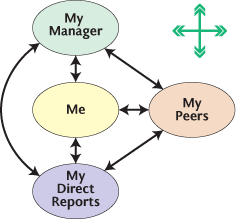
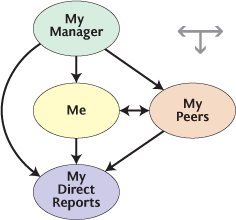
A coaching culture incorporates coaching up (to your Boss), laterally (to your Peers), and down (to your Direct Reports), and encourages people to coach outside their management ‘line of sight’. Coaching conversations make it easier for people to talk about what is important in their jobs and in serving the strategy & mission of the organization.

Competency One: Leadership

Leaders set the tone, pace, and expectations for a culture as they inescapably role model what is expected, desired, and/or tolerated in the company. People assume permission to do what they perceive is modeled by their next level of leadership. Leaders model being a “coach practitioner” engaged in continuous learning about what it means to be a coach.

Competency Five: Systems Integration

All Human Resource Systems that impact people (recruiting, training, performance evaluations, promotions, compensation, personal development plans, etc.) have directly integrated coaching principles into their practices. The systems support and encourage coaching as a way of life.

Competency Four: Learning & Change

People are expected to have learning conversations with all teammates that result in more understanding and support for one another, more cohesion and trust, easier resolution of conflicts, and more results for the organization. People safely challenge ideas and decisions, lessons learned are shared more easily, risk-taking is enhanced and the organization becomes more effective and efficient.


©2007 Crane Consulting. All Rights Reserved.
Crane Consulting and FTA Press are divisions of Crane Business Group, Inc.

The materials provided in this website may be downloaded and/or reprinted for PERSONAL USE ONLY. Permission to reprint or electronically reproduce any material, document, trade name, logo or other graphic, in whole or in part, for any reason is expressly prohibited, unless prior written consent is obtained from Crane Consulting. Any unauthorized use of the materials appearing on this website may violate copyright, trademark or other applicable laws and could result in civil or criminal penalties.