COACHING IS APPLIED LEADERSHIP

My clients find that when people are free to fearlessly give and receive feedback about how to work with one another—and solve problems together—things get better, faster, and performance improves naturally.
Coaching Cultures far outperform non-coaching cultures. True, feedback-rich Coaching Cultures look and work like the figure below. Feedback and Coaching flow up, down, and sideways. Why? It’s because all members of the culture have access to the same feedback-based communication tools, such as our proven Collegial Coaching Roadmap.
Collegial Coaching Creates a Coaching Culture
- Feedback and coaching flow up, down, and sideways (note the arrows)
- Shared tools and vocabulary
- “The many coach the many”
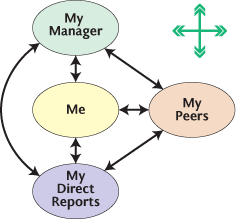
Collegial Coaching consists of a robust communication toolkit where colleagues focus on relationships and performance, co-creating a culture where these skills transform work:
- trustful working relationships are formed
- explicit performance expectations (vision, strategy, mission, goals, and core values) are set
- actionable feedback (timely, specific, and helpful) is delivered
- effective learning questions are asked and responses are listened to
- positive accountability is shared for all outcomes
- collaborative options are explored
- mutual action commitments are made
- support that is required for success is ensured
Plus, as organizations move toward eliminating dysfunctional annual performance reviews, Collegial Coaching provides a solution. Our repeating spiral roadmap makes coaching and feedback an ongoing conversational process.

People get the feedback they need, when they need it, to improve themselves and their performance.
Coached Culture versus True Coaching Culture
In contrast, the figure below depicts the common Coached Culture in which questions flow down and sideways. Professional Coaching essentially consists of a trained or credentialed coach asking questions that enlighten the client, hopefully leading the client to take action.
Professional Coaching Creates a Coached Culture
- Coaching questions flow down and sideways (note the arrows)
- Specially trained or credentialed
- “The few coach the many”
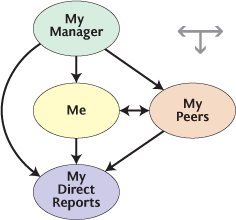
The Tipping Point for True Coaching Cultures
In our client work, the tipping point for Collegial Coaching up arrows to work is that leaders SHOW UP coachable. Coachable leaders—committed to accepting and responding to upward feedback—support the development of true, feedback-rich coaching cultures. Without leaders walking their talk, Collegial Coaching isn’t sustainable and the culture doesn’t fully shift.
Given a choice between a Coached Culture and a highly collaborative, feedback-rich, true Coaching Culture, which would you rather have?
If you’re ready for this leader-led, heartfelt journey to shape your true coaching culture—to perform better and faster, with greater engagement from everyone—I’d love to talk with you.
In the spirit of coaching…

Tom Crane
From Terry Tierney, CEO
Daiya Foods
Vancouver, British Columbia, Canada